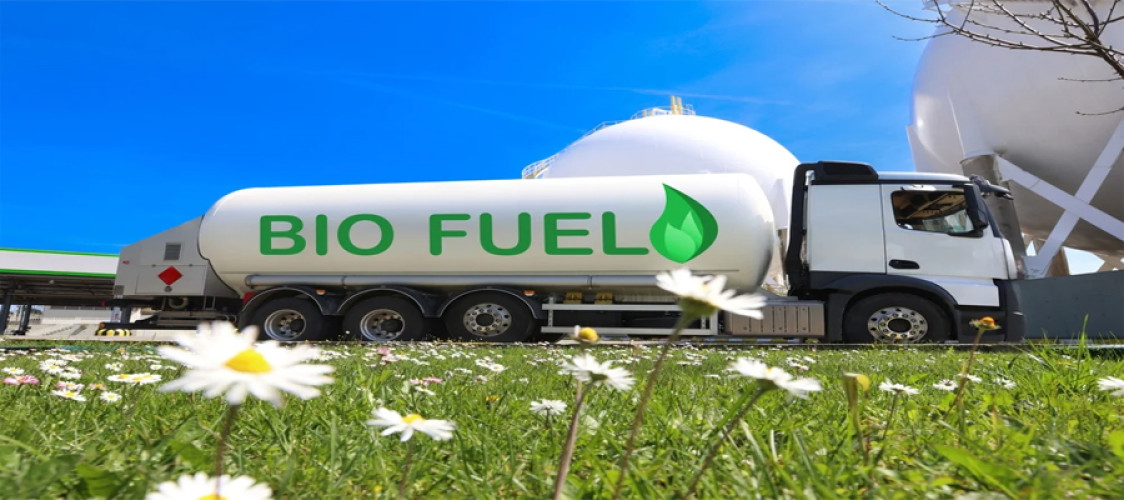
File Photo
The Trump administration ordered U.S. refiners on Friday to blend a record amount of biofuels into their gasoline and diesel this year and next, a move intended to help farmers but that the refining industry said would only backfire by raising pump prices already spiking due to the war in Iran.
The rebuke from the U.S. refining industry revealed a rare public rift between President Donald Trump's White House and oil companies that have traditionally backed his efforts to bolster the fossil-fuel energy sector.
"It’s baffling, with fuel prices already rising due to the conflict in Iran, that EPA is finalizing a rule that will make things far worse for consumers," said Chet Thompson, president and CEO of the American Fuel & Petrochemical Manufacturers.
"This is not what energy dominance looks like."
Trump is seeking to consolidate support among the important agriculture and energy constituencies ahead of the November midterm elections while battling consumer inflation, most visible at the gasoline pump. Since the outset of the Iran war, average retail U.S. gasoline prices have risen to nearly $4 a gallon nationwide.
MOVE WELCOMED BY FARMERS
Under the U.S. Renewable Fuel Standard, oil refiners are required to blend billions of gallons of corn-based ethanol and other biofuels into the nation’s fuel pool each year, or buy tradable credits called RINs from those that do such blending.
A RIN typically corresponds to one gallon blended. Farmers and biofuel producers support the program as vital to American farm country, but refiners view it as a costly burden.
The Environmental Protection Agency on Friday said it set total 2026 biofuel obligations, opens new tab at 26.81 billion RINs and 2027 obligations at 27.02 billion RINs. The new obligations include 70% of around 2 billion gallons that had been waived in 2023-2025 under a program which allows exemptions for small refiners.
The EPA said the figures represent the highest blending requirements on record. The increases are focused on biodiesel and renewable diesel production, while keeping mandates for ethanol blending stable at 15 billion gallons per year. See more.
Source: Online/BExpo


Copyright © 2026 Biofuel Expo Bangladesh. All Rights Reserved.
Website Design & Development ♡ MY SOFT IT
 EN
EN
 Chinese
 Turkish
 Indonesian
 German
 French
 Spanish
 Portuguese
 Russian
 Italian